Someone is becoming distressed. You want to help, so you explain what happened. You ask what is wrong. You reassure them. You offer three solutions, repeat the instruction and remind them what they need to do next.
Your intention is caring. Yet with every new sentence, the person becomes more agitated, more withdrawn or less able to respond.
In moments of overwhelm, more communication is not always more helpful.
Fewer words can help because an overwhelmed person may have less capacity to listen, process language, organise a response and act on what they have heard. Short, clear communication reduces the amount they need to manage. It can make space for safety, regulation and understanding before a longer conversation begins.
This does not mean speaking to someone as though they are incapable. It does not mean ignoring them, withholding information or using silence as punishment. It means matching communication to the person’s needs and capacity in that moment.
Sometimes the most supportive sentence is not a perfect explanation. It is simply:
“You’re safe. I’m here. We can talk later.”
Why Can Language Become Harder During Overwhelm?
Every conversation asks the brain to do several things at once. A person may need to notice your voice, separate it from background noise, understand the words, remember the beginning of the sentence, work out what you mean, decide how they feel and prepare a response.
When the person is calm and well supported, these processes may happen easily. When they are frightened, angry, overloaded, exhausted or in pain, the same conversation can require far more effort.
Research on acute stress has found that stress can impair working memory and cognitive flexibility. In everyday terms, it can become harder to hold information in mind, shift perspective and use the response that might normally be available. This does not mean every overwhelmed person experiences the same cognitive changes. It helps explain why a long explanation that seems reasonable to us may be difficult to use in the moment.
Overwhelm can also involve:
- sensory overload from noise, light, touch, crowds or movement
- difficulty identifying or expressing what is happening internally
- reduced access to speech or a preferred communication method
- fear of being blamed, controlled or misunderstood
- pain, illness, fatigue, hunger or medication effects
- too many demands, choices or unexpected changes
- several people speaking or asking questions at once
In this state, language can become another form of input. Even reassurance can add pressure if it is lengthy, repeated or requires an immediate answer.
What Does “Use Fewer Words” Actually Mean?
Using fewer words means communicating the most important information in the clearest accessible form, then allowing time for it to be processed.
It may involve:
- one idea or instruction at a time
- short, concrete sentences
- a calm and steady tone
- pausing instead of immediately repeating yourself
- reducing questions
- using a visual, gesture, written message or AAC
- offering one or two genuine choices
- postponing explanations and problem-solving until later
The purpose is not to make language unnaturally blunt. It is to remove what the person does not need right now.
| Instead of This |
Try This |
| “I need you to stop, listen to me and tell me why you are doing this because we have already discussed what happens when you behave this way.” |
“Pause. You’re safe. We’ll talk later.” |
| “Do you want to sit here, go outside, get some water, call Mum or tell me what is wrong?” |
“Quiet room or outside?” |
| “There is nothing to worry about. The appointment will be fine, we have done this before, and it will only take a few minutes.” |
“The appointment starts at 2. I will stay with you.” |
| “You need to calm down before we can work out what you are trying to say.” |
“Take your time. You can show me.” |
The shorter version is not automatically correct. The right words depend on the person, the situation, their communication preferences and any current support plan.
Fewer Words Does Not Mean Less Respect
Reducing language should never become a reason to speak down to someone. A short sentence can still be warm, adult and respectful.
Compare:
- “Good boy. Sit.”
- “Let’s sit somewhere quieter.”
Both are brief. Only one preserves dignity.
Respectful communication includes:
- using age-appropriate language
- speaking to the person, not only about them
- allowing refusal and disagreement to be communicated safely
- avoiding baby talk, sarcasm and public correction
- explaining important decisions when the person can engage
- checking that communication has been understood without turning it into a test
Fewer words are helpful only when they increase accessibility. If they remove the person’s information, choices or rights, they are no longer serving that purpose.
What FABIC Clinicians Say About Communication and Capacity
A pattern across the FABIC clinician interviews is that good support adapts to the person rather than expecting the person to adapt to one fixed communication style.
Clinicians described:
- using simple, concrete communication when pressure is high
- remaining calm so they do not add more intensity to the interaction
- being comfortable with silence rather than filling every pause
- recognising communication in behaviour, body language and movement
- using visual and activity-based approaches when reflective conversation is not accessible
- changing the approach when the person’s capacity, environment or circumstances change
One clinician described listening without a pre-set agenda and being comfortable with silence. Another discussed how a non-speaking person may use behaviour to communicate and how supporters can become too overwhelmed to see the message clearly. The shared lesson is that communication is not measured by how much the supporter says. It is measured by whether understanding becomes more possible.
This fits with the wider FABIC principle of asking what sits beneath behaviour rather than reacting only to what is visible. Read more in
Why Do People Behave the Way They Do?
Signs That Someone May Need Less Language
A person does not need to say, “I cannot process this conversation,” for communication to be too demanding. Possible signs include:
- covering their ears, turning away or closing their eyes
- pacing, rocking, freezing or becoming unusually still
- repeating a word or phrase
- saying “stop”, “leave me alone” or “I don’t know” repeatedly
- losing access to speech or giving answers that do not match the question
- agreeing quickly without appearing to understand
- becoming more distressed each time the question is repeated
- trying to leave or pushing communication materials away
- moving from active distress into shutdown
- using behaviour that has previously communicated pain, fear, escape or the need for space
These signs are not a diagnosis, and they do not tell us the cause by themselves. They are information that the current communication approach may not be working.
What to Say as Overwhelm Begins
The earlier we notice changes in capacity, the easier it may be to reduce pressure before the situation intensifies.
Name What Is Happening Without Judgement
- “It’s getting noisy.”
- “The plan changed.”
- “That was unexpected.”
- “This looks like a lot right now.”
Avoid telling the person what they must feel. “You are angry” may be incorrect. Describe what is known and leave room for them to clarify.
Reduce the Immediate Task
- “First, shoes. Then car.”
- “One question only.”
- “We can pause this.”
- “You don’t have to decide yet.”
Offer a Small Number of Genuine Choices
- “Lights on or off?”
- “Here or outside?”
- “Talk or write?”
- “Five minutes or ten?”
Choice can restore some predictability and control. Too many options can create another decision the person has to manage.
State What Will Happen Next
- “I’ll wait by the door.”
- “No one else is coming in.”
- “We leave after the doctor.”
- “I’ll check again at 3 o’clock.”
Predictable information is often more useful than repeated reassurance.
What to Say During Peak Dysregulation
At the peak of dysregulation, the priority is usually immediate safety and reducing what the person has to process. This is rarely the moment to investigate motives, correct every detail or teach a lesson.
Useful language may include:
- “I’m here.”
- “You’re safe.”
- “I’ll give you space.”
- “Stop. Road.”
- “Hands down.”
- “This way.”
- “We’ll talk later.”
Safety language may need to be direct. Use the least amount of language required to communicate the immediate action. Follow any established behaviour support, health or safety plan.
Avoid:
- lecturing or demanding an apology
- asking repeated “why” questions
- arguing about facts
- threatening unrelated consequences
- speaking over another supporter
- insisting on eye contact
- touching the person without consent unless an immediate lawful safety response requires otherwise
- continuously repeating “calm down”
Reducing language is only one part of support. Noise, lighting, proximity, crowding, demands and the number of people present may also need to change.
For a more complete immediate-response guide, see
What to Do When Someone Is Dysregulated: Settle First, Teach Later.
Why Repeating the Same Sentence Can Make Things Harder
When someone does not respond, our instinct is often to say the same thing again—sometimes louder or with more detail.
But no immediate response does not necessarily mean the person ignored you. They may still be processing the first sentence. They may understand but be unable to organise speech. They may need a visual cue, a different word, more time or less pressure.
After giving a short message:
- Pause.
- Observe rather than immediately filling the silence.
- Allow the person’s usual processing time.
- If needed, present the information in another accessible form.
- Check understanding later without shaming them.
Silence can feel uncomfortable for the supporter. That discomfort does not always need to be solved with more talking.
Fewer Questions Can Create More Space to Communicate
Questions can be demanding. The person must understand what is being asked, search for information, decide what can safely be shared and formulate an answer.
During overwhelm, a rapid sequence can feel like an interrogation:
“What happened? Why did you leave? Did someone say something? Are you hurt? Do you want me to call someone?”
Try one observation and one accessible invitation:
“You left the room quickly. You can tell me, write it or show me when you’re ready.”
Not every silence needs another question. The person may communicate after the pressure to answer has reduced.
Communication Is More Than Speech
When spoken language becomes difficult, do not assume that communication has stopped.
A person may communicate through:
- AAC
- gesture or sign
- pointing or eye gaze
- pictures, symbols or a visual scale
- typing, texting or writing
- movement, posture and facial expression
- approaching, withdrawing or changing their usual behaviour
If the person uses AAC, it should remain available during distress. Do not remove a communication system because the person is upset or because the supporter believes speech would be faster.
A visual can sometimes carry information without requiring the person to hold a full sentence in working memory. This might include a “break” card, a first–then board, a picture of the next location, a written time or two visible choices.
Communication supports should be individualised. A visual that helps one person may confuse or distress another. Learn the person’s established system rather than introducing unfamiliar tools during a crisis.
Autism, Sensory Overload and Language
Autistic people can differ widely in how they process sensory input, spoken language, emotion and social communication. A person who communicates fluently at one time may find speech or auditory processing far more difficult during overload.
Helpful adjustments may include:
- reducing background conversation
- turning down avoidable sound or light
- avoiding figurative, vague or indirect language
- allowing more time before expecting a response
- using the person’s preferred visual or written communication
- avoiding forced eye contact or touch
- respecting movement or stimming that is safe and supportive
The Australian
Supporting Autistic Children Guideline emphasises support that is safe, effective and desirable to autistic children and their families. Good communication support should be developed with the person and adjusted to their strengths, preferences and goals.
Autism is not the only context in which fewer words may help. A person experiencing panic, trauma responses, acquired brain injury, intellectual disability, dementia, pain or extreme fatigue may also need communication adjusted. The reason, method and level of support will differ.
What Happens After the Person Is Settled?
“Fewer words” is not a rule for the whole relationship. Important conversations should not disappear simply because they were postponed.
When the person has enough capacity, return to:
- what happened from their perspective
- what made the situation difficult
- any harm or impact that needs to be acknowledged
- the boundary or expectation
- what communication method helped
- what could be changed in the environment
- what skill can be taught or practised
- what the supporter can do differently next time
The later conversation should be collaborative, not a delayed punishment. Describe the behaviour without turning it into the person’s identity.
For example:
“When the plan changed, you pushed the chair and left. You told me afterwards that the room was too loud and you did not know where we were going. Next time, we can show the new plan and you can use the break card. Pushing furniture is still unsafe, so we need another way to leave.”
This holds safety, understanding and responsibility together.
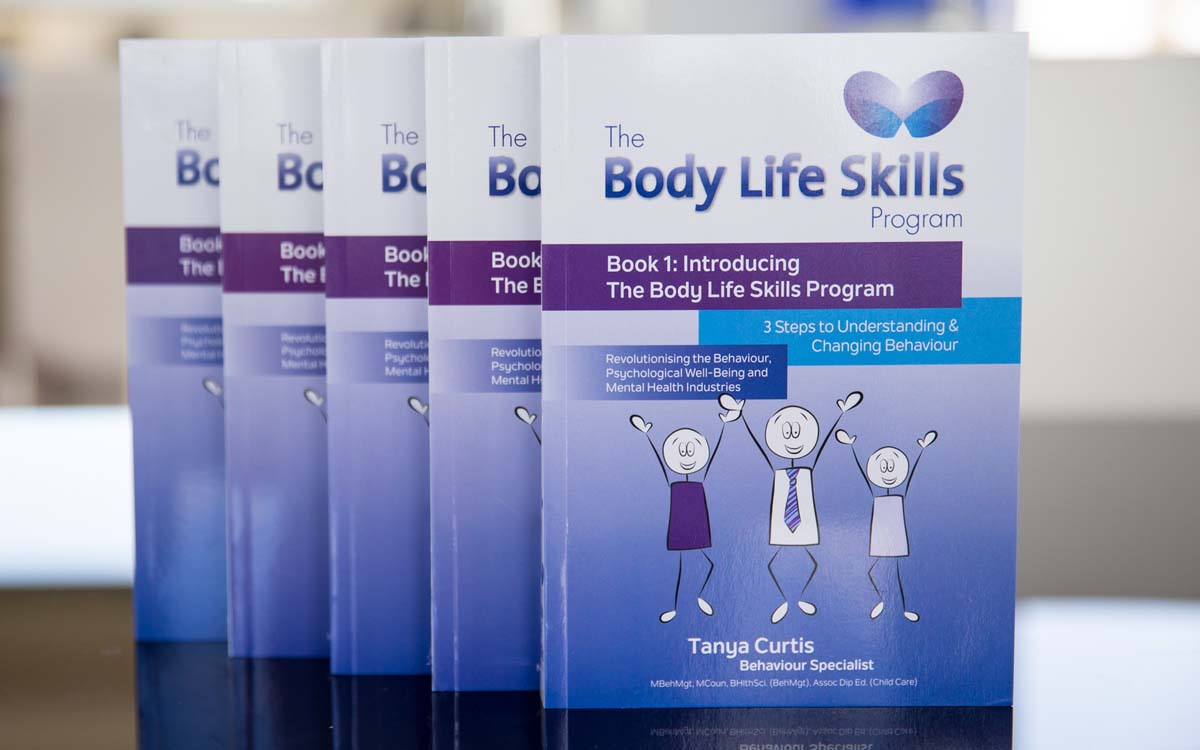
Using Body Life Skills to Decide What to Say
The
FABIC Body Life Skills Program offers a practical way to understand behaviour:
| Part |
What We Consider |
| BODY |
What is the person’s body doing? Are there signs that their capacity or access to language has changed? |
| LIFE |
What part of life is being presented? Is there noise, uncertainty, pain, conflict, a demand or an unexpected change? |
| SKILLS |
What communication, regulation or practical skill would help? What must supporters change so that skill can be used? |
During the immediate moment, the SKILL may be using a break card, moving to a quieter place or choosing between two clear options. Later, it may involve learning to recognise early signs of overload, ask for clarification or prepare for a change.
The goal is not to keep the person dependent on supporters using perfectly chosen words. It is to build understanding, accessible communication and skills that increase agency over time.
Common Mistakes to Avoid
Making Every Sentence a Command
Short communication can become controlling if every phrase tells the person what to do. Include information, reassurance and genuine choice where possible.
Assuming Silence Means Consent
A person who stops responding may be overloaded, frightened or unable to access their usual communication. Silence should not automatically be treated as agreement.
Talking About the Person as Though They Are Not There
If supporters need to coordinate, keep discussion minimal in the person’s presence and preserve privacy. Include the person in a form they can access when the situation is safe.
Using Fewer Words but More Intensity
“STOP. NOW.” may be short, but volume, facial expression and proximity can still add threat. In an immediate danger, a firm direction may be necessary. Outside that situation, use the least intensity needed.
Never Returning to the Conversation
Reducing language during overwhelm should not become avoidance. The person still deserves information, an opportunity to express their experience and support to build skills afterwards.
Applying the Same Script to Everyone
Some people find brief language reassuring. Others may experience unexplained brevity as cold or alarming. Individualised support matters because the same diagnosis does not mean the same needs.
How Families and Support Teams Can Create a Shared Communication Plan
Communication is easier when supporters agree on what helps before a crisis occurs. A simple plan might record:
- the person’s early signs of overload
- their preferred communication methods
- words or phrases they find helpful
- language, questions or tones that increase distress
- how much processing time they usually need
- which visuals or AAC supports are familiar
- how to offer space without appearing to abandon them
- what supporters should do if risk increases
- when and how to return to the conversation
The person should be involved as fully as possible. The plan should also be reviewed when communication, health, environment, risks or preferences change.
If a strategy is not helping, that is information. It may mean the hypothesis, timing, language, environment or support needs to be reconsidered—not that the person is choosing to fail.
When Professional Support May Help
Professional support may be useful when:
- overwhelm regularly affects safety, relationships or daily participation
- the person loses access to speech or communication frequently
- supporters are unsure what the person’s behaviour is communicating
- different people respond in conflicting ways
- there is aggression, self-injury, absconding or another significant risk
- communication strategies repeatedly fail
- the person may benefit from behaviour support, psychology, occupational therapy or speech pathology
A sudden change in behaviour, communication or emotional regulation may also indicate pain, illness, medication effects or another health issue. Seek appropriate medical advice rather than assuming the change is “just behavioural”.
Frequently Asked Questions
How Many Words Should I Use?
There is no universal number. Use enough language to communicate the immediate message safely and respectfully, then pause. The person’s established communication preferences and support plan should guide you.
Should I Stop Talking Completely?
Not necessarily. Complete silence can feel supportive to one person and abandoning to another. A brief statement such as “I’ll be nearby” may give both space and reassurance. Observe the person’s response and use what is known about their preferences.
What If They Keep Asking the Same Question?
Repeated questions may reflect anxiety, difficulty holding the answer in mind or a need for predictability. Give a brief consistent answer and consider making it visible in writing, a schedule or a timer. Repeating a longer explanation each time may increase the information they have to process.
Is This Only for Autistic People?
No. Reducing language can help many people during high stress, sensory overload, panic, pain, fatigue or other states that affect processing. It must still be individualised.
What If the Person Needs to Understand a Safety Direction?
Give the clearest immediate direction you can: “Stop. Cars.” or “Put the knife down.” Additional explanation can come after the immediate danger has passed. Follow any established emergency or behaviour support plan.
Does Using Simple Language Reduce Someone’s Independence?
Accessible communication should support independence, not replace it. The aim is to give the person information in a form they can use and preserve opportunities for choice, consent and self-expression.
When Should We Discuss the Behaviour?
Return to it when the person has enough capacity to participate. That may be minutes later, later that day or at another agreed time. The discussion should focus on understanding, safety, repair and future skills rather than blame.
How FABIC Can Help
FABIC supports children, young people and adults to understand behaviour, strengthen communication and develop practical skills for responding to life.
Support is individualised and may involve behaviour support, psychology, counselling, occupational therapy, speech pathology and collaboration with families, schools, carers and support teams.
Rather than focusing only on stopping visible behaviour, FABIC works to understand what is happening for the person and what skills, communication supports or environmental changes may create lasting improvement.
Learn more about FABIC Behaviour Support Practitioner services.
When someone is overwhelmed, every additional sentence asks them to process more. Fewer words can lower that demand and make the essential message easier to find.
Speak clearly. Pause. Make space for other forms of communication. Support safety first, then return to understanding and teaching when capacity has returned.
If overwhelm or communication difficulties are affecting daily life, relationships or safety, FABIC can help you identify what sits beneath the behaviour and develop practical, individualised support.
BOOK IN WITH FABIC TODAY
General information only: This article is educational and does not replace individual medical, psychological, legal, crisis, speech pathology or behaviour support advice. Follow any current professional, communication or safety plan developed for the person. If there is an immediate risk of serious harm or a medical emergency, call Triple Zero (000).
References and Further Reading
-
- FABIC. The Body Life Skills Program.
- FABIC. FABIC Ethos and Principles of Client Care.
- FABIC. What to Do When Someone Is Dysregulated: Settle First, Teach Later.
- FABIC. Why Do People Behave the Way They Do? Understanding What Sits Beneath Behaviour.
- FABIC. Why Individualised Support Matters: The Same Diagnosis Does Not Mean the Same Needs.
- NDIS Quality and Safeguards Commission. Positive Behaviour Support Capability Framework, Version 3.
- NDIS Quality and Safeguards Commission. Behaviour Support Assessment, Including Functional Behaviour Assessment: Practice Guide.
- Trembath, D., Varcin, K., Waddington, H., Sulek, R., Bent, C., Ashburner, J., Eapen, V., Goodall, E., Hudry, K., Roberts, J., & Whitehouse, A. (2022). National Guideline for Supporting the Learning, Participation, and Wellbeing of Autistic Children and Their Families in Australia. Autism CRC.
- Shields, G. S., Sazma, M. A., & Yonelinas, A. P. (2016). The Effects of Acute Stress on Core Executive Functions: A Meta-Analysis and Comparison With Cortisol. Neuroscience & Biobehavioral Reviews, 68, 651–668.
- NSW Health. Integrated Trauma-Informed Care Framework: My Story, My Health, My Future.