
“Why are they doing this?”
It is a question many of us ask when someone shouts, withdraws, refuses, repeats an action, damages something or behaves in a way that is difficult to understand. In a stressful moment, it can be tempting to decide that the person is being difficult, defiant, rude or attention-seeking.
But the behaviour we see is only the visible part of the story.
In simple terms, people behave the way they do because behaviour is a response to what is happening within them and around them. It can be influenced by physical health, emotions, communication, sensory needs, relationships, past experiences, the environment, what has happened before and the skills available to the person at that moment. A behaviour may help someone access something they need, move away from something difficult, regulate their body or communicate when another form of communication is not working.
Understanding this does not mean excusing unsafe or harmful behaviour. It means becoming more accurate about why it is happening so that we can respond safely, respectfully and effectively.
What Do We Mean by Behaviour?
Behaviour is anything a person does that can be observed. It includes actions, words, facial expressions, movement, silence and the ways a person interacts with the world around them. Speaking, asking for help, walking away, crying, laughing, pacing, refusing, hitting and using a communication device are all forms of behaviour.
We all behave, all day, every day. Some behaviours are welcomed by other people. Some are not. Some are safe, while others can create a risk to the person or those around them. What matters is that a behaviour is something a person does; it is not the person’s identity.
Clear descriptions help us understand behaviour more accurately. Labels often mix an observation with an assumption about character or intent:
| Label or Assumption | What Was Actually Observed? |
|---|---|
| “She was being difficult.” | She pushed the worksheet away, turned her chair and said, “No.” |
| “He wanted attention.” | He called the support worker’s name six times while the worker was speaking to someone else. |
| “They had a meltdown for no reason.” | They covered their ears, cried and left the room shortly after the music became louder. |
| “He is aggressive.” | He hit the table with an open hand and pushed a chair after the planned activity changed. |
The descriptions in the right-hand column do not tell us the reason either. They simply give us a clearer place to begin. We can then ask what happened before, what happened afterwards, what else was affecting the person and what the person tells us about their experience.
Behaviour Is Information, Not Identity
A principle repeated across FABIC’s clinical team is that behaviour is something a person does, not who they are.
A person may use an aggressive behaviour without aggression being their identity. A child may avoid a task without being lazy. Someone may communicate in a way that other people find confronting without being a “bad person”. When we turn one behaviour into a description of the whole person, it becomes harder to stay curious and easier to respond with blame, shame or punishment.
Separating the person from the behaviour allows us to hold two truths at once:
- The person remains worthy of dignity, care and respect.
- The behaviour may still need to change because it is unsafe, harmful or not supporting the person’s quality of life.
This is not permissiveness. It is a practical starting point for responsibility and change. If we can see the person clearly, we are in a better position to understand what is happening and teach a safer or more effective way to respond.
You can read more about the values that guide this approach in the FABIC ethos and principles of client care.
What Can Sit Beneath Behaviour?
There is rarely one simple answer that explains every behaviour. Human beings are influenced by many interacting factors, and capacity can change from one moment or environment to the next.
What sits beneath behaviour may include:
- Physical and health factors: pain, illness, hunger, thirst, fatigue, poor sleep, medication effects or another change in the body.
- Communication: difficulty expressing a need, understanding what has been said, asking for help, saying no or using an available communication method.
- Sensory experiences: noise, lighting, touch, movement, temperature, crowds or a need for more or less sensory input.
- Emotions: anxiety, frustration, grief, fear, disappointment, loneliness, shame or overwhelm.
- Relationships and connection: a need for reassurance, belonging, attention, trust, predictability or time with another person.
- The environment: unclear expectations, rapid transitions, too many demands, limited choice, an inaccessible space or inconsistent responses from others.
- Skills and current capacity: the person may not yet have a reliable skill for communicating, waiting, coping with change, regulating emotions, solving a problem or completing what is being asked.
- Learning history: what has happened after the behaviour in the past may make it more or less likely to happen again.
- Life history and context: previous experiences, culture, trauma, beliefs, losses and major changes can affect how a situation is understood and experienced.
These are possibilities, not conclusions. For example, leaving a room could be a way to escape noise, take a break from a difficult task, move away from conflict, find a trusted person or manage physical discomfort. It may involve several of these at once.
This is why a diagnosis alone does not explain the function of a behaviour. Two people with the same diagnosis can behave differently, and two people using the same behaviour may be doing so for completely different reasons. The person, their circumstances and the context all matter.
Is Behaviour a Form of Communication?
Behaviour can communicate useful information, even when it is not a deliberate message.
A young person who rips up a worksheet may not be consciously communicating, “I do not understand the instructions and I am worried about failing.” Even so, the behaviour may tell us that something about the task, the setting or the person’s capacity needs closer attention.
Communication also extends well beyond speech. A person may communicate through:
- words, sounds or changes in tone
- gesture, posture, movement and facial expression
- writing, pictures or visual supports
- sign language or an augmentative and alternative communication (AAC) system
- approaching, withdrawing, becoming still or changing their usual pattern of behaviour
A non-speaking person is still communicating. A speaking person may also find words harder to access when anxious, overloaded, unwell or distressed. Good support pays attention to the communication methods available to the person rather than assuming that speech is the only reliable source of information.
It is also important not to “translate” a behaviour too quickly. We may form a hypothesis, but whenever possible we should check it with the person, observe patterns and remain willing to discover that our first idea was wrong.
What Is the Function of Behaviour?
The function of a behaviour is the purpose it serves or the outcome it helps a person achieve. In functional behaviour assessment, practitioners look for patterns that help explain why the behaviour is more likely to occur in particular situations and what may be maintaining it over time.
Current NDIS Commission guidance notes that functions are typically framed in terms of what a person is seeking or trying to avoid. This can include:
- accessing or seeking something, such as connection, assistance, an item, an activity or sensory input
- avoiding or moving away from something, such as a demand, pain, noise, uncertainty, social contact or an overwhelming environment
In everyday language, we may also say that behaviour communicates a need or helps someone regulate their body. A formal assessment goes a step further by identifying the specific outcome the behaviour appears to produce and placing that function within a broader understanding of the person’s health, communication, sensory experience, relationships and circumstances.
A function is not a moral judgement, a diagnosis or a claim that the person planned the behaviour. It is a working explanation that should be supported by information, observation and collaboration.
The examples below show why the visible behaviour alone is not enough:
| What We See | One Possible Explanation | A Possible Skill or Support |
|---|---|---|
| A student shouts when work is presented. | The task feels too difficult and shouting has previously delayed it. | Teach a way to request help or a short break, and adjust the task to the right level. |
| A person repeatedly calls a support worker. | They may be seeking reassurance, connection or information about what happens next. | Offer predictable check-ins, a visual schedule or a reliable way to ask a question. |
| A person leaves a busy room. | The sound, crowd or social demand may be overwhelming. | Provide access to a quieter space and a clear way to request it before distress builds. |
| A person hits their head. | Possible contributors could include pain, distress, sensory regulation, communication difficulty or escape from a demand. | Prioritise safety and medical review where indicated, then complete careful assessment before selecting support. |
These examples are not formulas. The same behaviour can serve more than one function, and its function can change. A strategy that works in one setting may not work in another because the people, demands, environment or person’s capacity are different.
The Same Behaviour Can Have Different Reasons
Imagine three children leave a classroom at the start of written work.
- One child cannot yet read the instructions and leaves to avoid the embarrassment of asking.
- Another finds the classroom noise painful and goes to the corridor for relief.
- A third has learned that leaving leads to one-to-one time with a familiar adult.
The behaviour looks the same, but the support each child needs is different. More reading support may help the first child. Sensory and environmental adjustments may help the second. The third may benefit from predictable connection and a safer way to ask for it.
The reverse is also true: the same underlying need can lead to different behaviours. Two people who do not understand a task might respond by asking for help, becoming silent, joking, leaving, tearing up the page or becoming verbally confrontational. Their available skills, previous experiences and current capacity influence what happens next.
This is one reason generic behaviour strategies often produce inconsistent results. A strategy based only on what the behaviour looks like may never address what is maintaining it.
How FABIC’s Body Life Skills Program Looks Beneath Behaviour
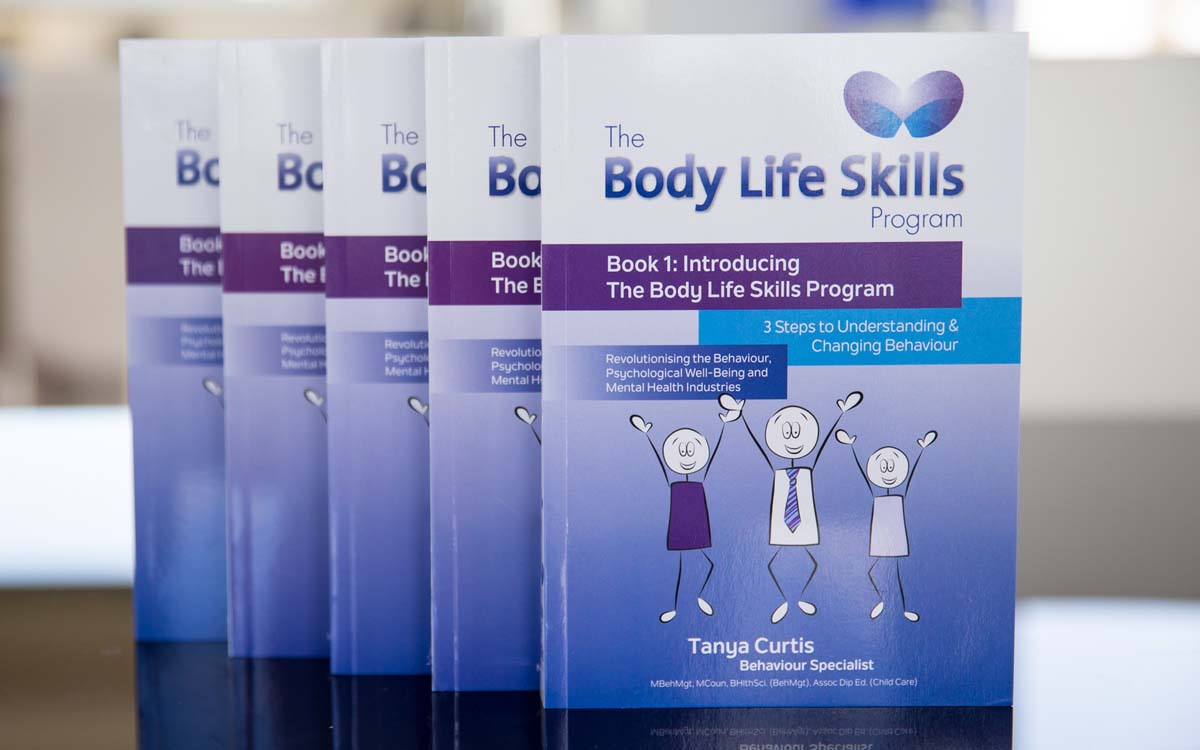
The FABIC Body Life Skills Program offers a practical way to understand behaviour and support lasting change. It separates the process into three parts:
| Body Life Skills Step | The Question We Ask |
|---|---|
| BODY | What is the person’s body doing? Describe the behaviour clearly, without turning it into their identity. |
| LIFE | What part of life is being presented that the person may not yet feel equipped to respond to? |
| SKILLS | What skills, support or environmental changes could help the person respond differently next time? |
Within this framework, the behaviour is not treated as the whole problem. It is a sign that there may be a life situation to understand and a skill to build.
For example, if a person yells whenever plans change, simply telling them to stop yelling addresses the BODY but not necessarily the LIFE or SKILLS. Looking beneath the behaviour might reveal that unexpected change feels unmanageable. Useful support could include clearer preparation, a visual plan, a way to ask questions, a short regulation strategy and gradual practice coping with small changes.
The goal is not to make a person compliant. It is to help them become more equipped to participate, communicate, make choices and respond to life in ways that support safety and quality of life.
A Practical Way to Understand What Is Happening
You do not need to guess someone’s thoughts to begin looking beneath behaviour. Start with careful observation, respectful curiosity and information from the person and people who know them well.
1. Support Safety and Settle the Moment
If someone is highly distressed, the first priority is safety—not a lesson, a lecture or a detailed investigation. Reduce immediate demands where appropriate, use simple language, give space, remove avoidable hazards and follow any established safety or behaviour support plan.
Our own state matters too. When we become frightened, angry or defensive, we are more likely to react to the behaviour personally. A calm, grounded response can reduce the amount of emotion and demand entering an already difficult situation. Understanding can come later, when everyone has more capacity.
2. Describe What Happened
Write down what a camera could have recorded: what the person said or did, how often it happened, how long it lasted and how intense it was. Avoid words that assume intent, such as “manipulative”, “naughty” or “did it for no reason”.
3. Look at What Happened Immediately Before
Was a request made? Did an activity end? Did someone enter or leave? Was an item unavailable? Did the noise level change? Was the person asked to wait, share, transition or complete something unfamiliar?
The event immediately before a behaviour is sometimes called an antecedent or trigger. A trigger is not always the full explanation, but it can reveal a useful pattern.
4. Consider the Wider Context
What made this moment harder than usual? The person may have slept poorly, missed a meal, experienced pain, started a new medication, had a conflict earlier in the day, encountered an unfamiliar worker or faced several changes in routine. These wider factors are sometimes called setting events because they can affect the likelihood or intensity of behaviour.
5. Notice What Happened Afterwards
Did the task stop? Did the person receive help, space, an item, a conversation or access to a preferred activity? Did other people move closer or further away? The outcome that follows a behaviour can help us understand what the behaviour achieves and why it may happen again.
6. Include the Person’s Voice
Ask the person what happened in a way they can understand and answer. Depending on the person, this might involve speech, AAC, visuals, choices, drawing, observation or extra time. Listen to their goals and preferences as well as the concerns of family members, educators, carers and support workers.
Collaboration matters because no one observer sees every part of a person’s life. It also reduces the risk that one person’s interpretation becomes the accepted explanation without being tested.
7. Form a Hypothesis, Then Keep Checking It
A hypothesis is a careful best explanation based on the information available. It should remain open to confirmation, challenge and revision. If support based on the hypothesis does not help, that is information—not proof that the person is unwilling to change.
A simple observation record can help organise the information:
| What to Record | What It Includes |
|---|---|
| Wider context | Sleep, health, routine, staffing and relevant earlier events |
| Before | The immediate situation or observable trigger |
| Behaviour | Exactly what was seen and heard |
| After | What changed or what the person accessed or moved away from |
This kind of record can reveal patterns, but it is not a substitute for a comprehensive assessment when behaviour is complex, persistent or creates risk.
Questions That Keep Curiosity Open
Instead of asking, “What is wrong with this person?”, try asking:
- What happened before the behaviour?
- What changed in the environment, routine or relationship?
- What might the person be seeking or trying to move away from?
- Could pain, illness, sleep, hunger or medication be affecting them?
- Does the person understand what is happening and what is expected?
- Do they have a reliable way to ask for help, a break, more information or connection?
- Is the task matched to their skills and current capacity?
- What happens after the behaviour, and could that be maintaining the pattern?
- What does the person say or show us about the experience?
- What skill, support or environmental change could make a different response more possible?
The aim is not to find an excuse. It is to replace certainty with investigation and find a response that addresses the actual need.
Why Punishment or “Just Stop It” Often Misses the Point
When a behaviour is unsafe, adults understandably want it to stop quickly. Immediate limits and safety responses may be necessary. However, stopping the visible behaviour is not the same as resolving what sits beneath it.
If a person tears up work because they cannot read it, punishment does not teach reading or help-seeking. If someone becomes distressed because they cannot predict what happens next, repeated correction does not create predictability. If a person hits because it is their most reliable way to end an overwhelming demand, removing that behaviour without teaching another way to request a break leaves the original need unchanged.
Sometimes the behaviour may temporarily reduce because the person is frightened of the consequence. It may also return, intensify or be replaced by another behaviour that serves the same function.
This does not mean there should be no boundaries or consequences. Safe, respectful boundaries are important. The strongest response pairs them with:
- a clear understanding of the behaviour and its likely function
- changes that make the environment more accessible and predictable
- teaching a safer, useful alternative that meets the same need
- consistent responses from the people around the person
- opportunities to practise the new skill when the person is settled
What Creates Lasting Behaviour Change?
Across FABIC’s clinician interviews, several themes appeared again and again: begin with connection, remain curious, avoid defining the person by the behaviour, gather information, involve the support community, tailor the approach and teach skills at a pace the person can manage.
Lasting change is more likely when support includes:
- A person-centred goal: Change should improve the person’s safety, participation, autonomy or quality of life—not simply make life more convenient for others.
- A functional understanding: Strategies should respond to the reason the behaviour occurs, not only its appearance.
- Proactive environmental support: Adjusting communication, routines, demands or sensory conditions can reduce preventable distress.
- Practical skill-building: The replacement behaviour must be useful, achievable and as effective as the old behaviour in meeting the person’s need.
- Choice and involvement: People are more likely to engage with support that reflects their goals, preferences and communication.
- Consistency across the support team: A skill is harder to learn when the response changes from one person or setting to another.
- Review and adjustment: People and circumstances change. Support should be monitored and updated rather than treated as a fixed recipe.
Progress is not always a straight line. A behaviour may increase again during illness, grief, a house move, a relationship change, staff turnover or another period of reduced capacity. This does not erase the skills already learned. It may mean the person and their support team need more support, a review of the plan or time to adapt.
What Is a Functional Behaviour Assessment?
A Functional Behaviour Assessment (FBA) is a structured process used to understand why a behaviour occurs. It involves defining the behaviour clearly, gathering information from multiple sources, observing patterns and developing a hypothesis about the behaviour’s function within the person’s broader life context.
A comprehensive assessment may consider:
- the person’s own account, goals, preferences and communication
- physical and mental health
- sensory needs and environmental accessibility
- routines, relationships, culture and life history
- events that occur before and after the behaviour
- the skills and support available to the person
- information from family, carers, educators, clinicians and support workers
The current NDIS Commission guidance describes assessment as dynamic: hypotheses should be reviewed as new information becomes available. This matters because behaviour is complex, and an early assumption can be incomplete.
At FABIC, functional assessment informs practical strategies and skill-building rather than judgement or labelling. Learn more about Functional Behavioural Assessments and the Body Life Skills Program.
When Should You Seek Professional Behaviour Support?
It may be helpful to speak with a qualified professional when behaviour:
- creates a risk of harm to the person or others
- is increasing in frequency, duration or intensity
- affects home life, education, work, relationships or community participation
- is difficult for the person or support team to understand
- continues despite strategies already being tried
- involves complex communication, health, sensory or environmental factors
- may lead to the use of restrictive practices
A sudden or significant change in behaviour can sometimes indicate pain, illness, medication effects or another health issue. Seek appropriate medical advice rather than assuming the change is “just behavioural”. If there is an immediate danger or medical emergency, call Triple Zero (000).
A FABIC Behaviour Support Practitioner can work with the person and their support community to assess behaviour, identify contributing factors, develop practical strategies and build skills for lasting change. FABIC supports people in person and through telehealth, subject to suitability and service availability.
Frequently Asked Questions About Why People Behave the Way They Do
Why Do People Behave “Badly”?
“Bad behaviour” is a judgement, not an explanation. A behaviour that is unsafe or harmful still needs to be addressed, but useful questions include what happened, what the behaviour achieved, what the person understood and which skills or supports were available. Understanding the reason helps us respond without defining the whole person as bad.
Is All Behaviour Communication?
Behaviour can give us information about a person’s needs, environment or current capacity, even when it is not consciously intended as a message. However, we should not assume we know exactly what it means. Ask the person where possible, observe patterns and treat any explanation as a hypothesis to be checked.
What Is Behaviour Trying to Communicate?
It may indicate a need for help, connection, choice, predictability, relief from pain, a sensory adjustment, access to something important or a break from a difficult situation. It may also show that the person does not yet have a reliable skill for responding to what life is presenting. The meaning depends on the individual and context.
Does Understanding Behaviour Excuse Harm?
No. Understanding and accountability can exist together. We can acknowledge the reason a person became overwhelmed while maintaining a clear boundary that hitting, threats or other harmful behaviour are not safe. Understanding helps us teach a different response instead of relying only on blame or punishment.
Can Behaviour Change?
Yes. Behaviour can change when the person has meaningful reasons to engage, the environment supports success and safer alternative skills are taught and reinforced consistently. Change may be gradual and is rarely perfectly linear, especially when health, relationships or circumstances change.
What Is the Difference Between a Trigger and a Function?
A trigger is an observable event or situation that happens immediately before a behaviour, such as a request, loud noise or unexpected change. The function is the outcome the behaviour helps the person achieve, such as gaining help or moving away from an overwhelming demand. A trigger can start the sequence, while the function helps explain why that pattern continues.
Who Can Complete an NDIS Functional Behaviour Assessment?
For NDIS behaviour support, assessment and behaviour support planning should be completed by a behaviour support practitioner considered suitable by the NDIS Quality and Safeguards Commission. The practitioner should work collaboratively with the participant and their support network and follow current NDIS behaviour support requirements.
A Final Thought: Replace Judgement With Curiosity
The next time a behaviour does not make sense, try pausing before you decide what it means.
Ask: What might be happening beneath this? What is this person finding difficult? What are they seeking or moving away from? What skill or support could make another response possible?
We may not find the answer immediately. The willingness to ask, observe, listen and revise our understanding is still powerful. It helps us move from reacting to behaviour towards supporting the person—and from short-term control towards safer, more meaningful and lasting change.
Would You Like Help Understanding Behaviour?
If behaviour is affecting daily life, relationships, learning, independence or safety, you do not have to work it out alone. FABIC’s Behaviour Support Practitioners work with individuals, families and support teams to understand what sits beneath behaviour and develop practical, person-centred strategies.
Learn more about FABIC Behaviour Support services or use the link below to discuss the next step.
General information only: This article is educational and does not replace individual medical, psychological or behaviour support assessment. Seek advice from an appropriately qualified professional for your circumstances. If there is an immediate risk to safety or a medical emergency, call Triple Zero (000).
References and Further Reading
- FABIC. What FABIC Stands For.
- FABIC. Body Life Skills Program.
- FABIC. Functional Behavioural Assessments and the Body Life Skills Program.
- NDIS Quality and Safeguards Commission. Behaviour Support Assessment—including Functional Behaviour Assessment Guide (May 2026).
- NDIS Quality and Safeguards Commission. Positive Behaviour Support Capability Framework.
- NDIS Quality and Safeguards Commission. Evidence Matters: Developing Quality Behaviour Support Plans.
- Queensland Department of Education. Functional Behaviour Assessment.
If you would like support to understand behaviour and build practical skills for lasting change, FABIC’s team is here to help.